
Degenerative Disc Disease often sounds like a frightening diagnosis. It sounds progressive, threatening, and irreversible, but the name is actually quite misleading. It is not a disease in the traditional sense, but rather a natural condition of the spine that occurs with age.
By the age of 40, most people have some level of disc degeneration visible on an MRI. However, not everyone with degeneration experiences pain.
The goal of this guide is to help you understand why you are hurting. We will explain the mechanics of your spine and what specific treatments can help manage the symptoms. You do not have to live with chronic back pain just because you are getting older.
Key Takeaways:
- It is not technically a disease. Think of it as a natural aging process of the spine, similar to arthritis in a knee.
- Motion is essential. Movement enhances diffusion and nutrient exchange to support disc health while also reducing spinal pressure, keeping joints and muscles flexible, and helping control inflammation and pain.
- Surgery is rarely the first option. The vast majority of patients find relief through physical therapy, lifestyle changes, and interventional pain management.
- Symptoms are manageable. Flare-ups happen, but with the right treatment plan, baseline pain can be significantly reduced.
- Lifestyle plays a huge role. Lifestyle plays a major role, though genetics remains the strongest predictor of disc degeneration.
What is Degenerative Disc Disease (DDD)?
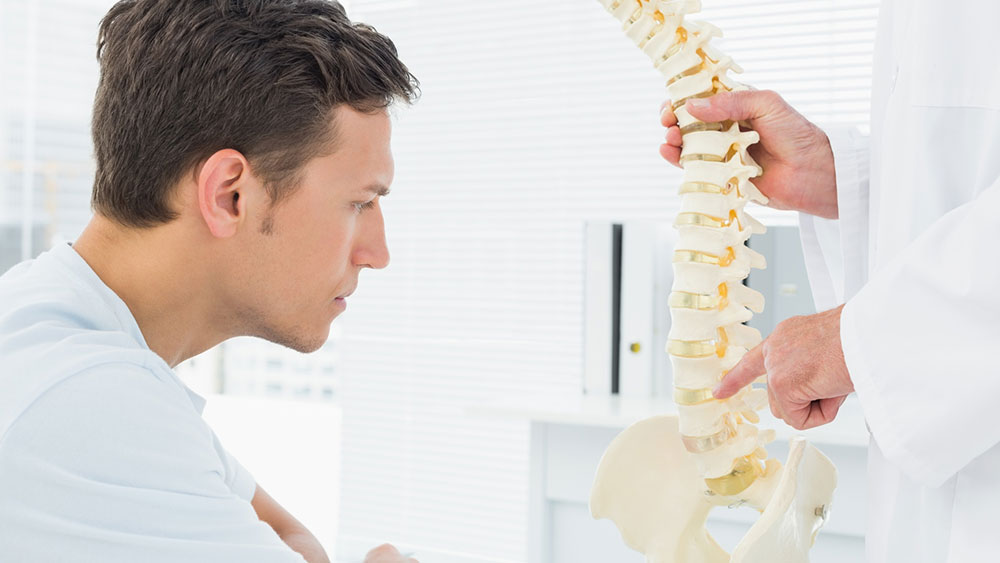
Your spine is an incredible structure that protects your spinal cord while allowing you to move freely. It is composed of a column of bones called vertebrae, stacked on top of one another. Between each of these bones lies a specialized pad called an intervertebral disc.
Anatomy of the Spine: Your Body’s Shock Absorbers
These discs act as shock absorbers for your body, cushioning your vertebrae during walking, jumping, and everyday movement. Each disc is made of two distinct parts that work together. The tough outer layer is called the annulus fibrosus, which contains nerves and provides structure. The soft, jelly-like inner core, called the nucleus pulposus, provides flexibility and compression resistance.
The Drying Out Process
As we age, these discs naturally lose their water content and hydration. A healthy disc is plump and flexible, much like a grape. On the other hand, a degenerated disc becomes dry, brittle, and flat, resembling a raisin.
When a disc loses its height, it changes the alignment of the spinal column. This loss of space can put pressure on the facet joints behind the disc. It can also narrow the openings through which nerves exit the spine, potentially leading to conditions such as spinal stenosis.
Symptoms: Is It Muscle Strain or Your Discs?
Pain from degenerative disc disease often feels different from a simple muscle pull or strain. Muscle strains usually heal within a few days or weeks with rest. Pain from disc degeneration tends to be recurrent, lingering, or triggered by specific positions.
The Hallmark Signals of DDD
The most common symptom is low-grade, continuous pain centered in the lower back or neck. This is often referred to as axial pain. You may notice that the pain worsens when you sit for long periods, bend over, or lift heavy objects.
Conversely, symptoms often improve when you change positions, walk, or lie down. Walking helps relieve pressure on the discs, while lying down removes gravity’s load entirely. This positional pattern is a key indicator of disc-related issues.
When the Disc Affects the Nerves
If the degeneration is severe, the structural changes can irritate nearby nerves. This leads to radiculopathy, a condition in which pain radiates away from the spine. A degenerated disc is more prone to tearing, which can result in a herniated disc or a bulging disc.
When a nerve is compressed, you may feel sharp, shooting pain traveling down your leg or arm.
Numbness and tingling in the extremities are also common warning signs. In some cases, you might experience weakness in specific muscle groups.
Causes and Risk Factors
While aging is the universal cause of degeneration, it is not the only factor at play. Some people have the spine of a 60-year-old when they are 30, while others maintain healthy discs well into retirement. A combination of genetics, lifestyle, and history determines how fast your spine ages.
The Inevitability of Aging
The primary risk factor for degenerative disc disease is simply getting older. Over time, the proteins in the disc space alter, and water content decreases. This is a biological process that happens to everyone, though the rate varies significantly.
Lifestyle Contributors
Certain habits can drastically accelerate the dehydration of your spinal discs. For example, smoking is one of the most harmful behaviors for spinal health. Nicotine constricts blood vessels, cutting off the limited blood supply that delivers nutrients to your discs.
Obesity is another major factor, as excess body weight places constant mechanical stress on the lumbar spine. Furthermore, occupations that require heavy lifting or prolonged sitting can wear down the annulus fibrosus over time. These external pressures speed up the natural drying process.
Acute Injury
A sudden trauma can jumpstart the degenerative process in a healthy spine. A car accident, a fall, or a sports injury can cause a tear in the outer layer of the disc. Once damaged, the disc often does not return to its original structural integrity.
Diagnosing the Source of Your Pain
Determining whether a degenerated disc is causing your back pain requires a comprehensive medical evaluation. A pain management specialist acts like a detective to trace the pain to its specific origin. They will combine your personal history with physical tests to form a diagnosis.
Physical Examination
During your visit, the doctor will check your range of motion and flexibility. They will touch specific areas of your spine to identify tenderness and swelling. They will also test your reflexes and muscle strength to see if nerves are being affected.
Imaging and Diagnostics
Imaging studies are essential for confirming the extent of the damage. X-rays are helpful for seeing bone spurs and the space between vertebrae. However, an MRI (Magnetic Resonance Imaging) is the gold standard for viewing soft tissues.
An MRI shows the hydration level of the discs and reveals herniations or nerve compression. Sometimes a doctor may use diagnostic injections to pinpoint the source of the pain. If injecting an anesthetic into a specific area stops the pain, that area is confirmed as the source.
A Tiered Approach to Treatment
A tiered approach to treating back pain is typically the best course of action. We always start with the least invasive options before considering advanced procedures. Surgery is rarely the first step and is usually unnecessary for managing DDD.
Tier 1: Conservative Management
The first line of defense is usually physical therapy and lifestyle modification. A physical therapist can teach you exercises to strengthen your core muscles. A strong core acts as a natural corset, taking the pressure off your spine.
Medications may also be used to manage acute flare-ups. Non-steroidal anti-inflammatory drugs (NSAIDs) can reduce swelling. Muscle relaxants may be prescribed if the pain is causing spasms. For more details, review our guide to back pain treatments.
Tier 2: Interventional Pain Management
If conservative care does not provide relief, we move to interventional procedures. These minimally invasive treatments aim to reduce inflammation, interrupt pain signals, and improve function.
Epidural steroid injections are a common and effective option. This procedure delivers a corticosteroid around the irritated spinal nerves to decrease inflammation. By calming nerve irritation, it can reduce pain, improve mobility, enhance participation in physical therapy, and give surrounding tissues time to heal.
For chronic pain that originates from the disc or surrounding structures, disc denervation may be recommended. This technique, performed using radiofrequency ablation, applies controlled heat to disrupt pain signals coming from nerves that transmit disc-related pain, providing longer-lasting relief than injections alone.
For contained disc herniations, percutaneous disc decompression (nucleoplasty) can be used to reduce pressure inside the disc. By removing or shrinking a small amount of disc material, this procedure relieves nerve compression without the need for open surgery.
Tier 3: Surgical Referral
Surgery is considered a last resort for degenerative disc disease. It is typically reserved for patients with severe neurological deficits or loss of bowel and bladder control. It may also be an option if all other pain management strategies have failed to improve quality of life.
Prevention: Protecting Your Remaining Disc Health
You cannot reverse the degeneration that has already occurred, but you can slow its progression. Taking proactive steps to protect your spine is essential for long-term comfort. Small changes in your daily routine can yield significant benefits.
Ergonomics and Posture
If you work at a desk, ensure your monitor is at eye level to prevent neck strain. Use a chair that provides adequate lumbar support for your lower back. Also, avoid staying in one fixed position for hours at a time.
Movement as Medicine
The spinal discs do not have a strong blood supply of their own. They rely on movement to circulate fluids and nutrients in and out of the tissue. Therefore, regular, low-impact activity like walking or swimming acts as “lotion” for your joints.
FAQs
Is degenerative disc disease hereditary?
Yes, genetics plays a significant role. If your parents or siblings suffered from back issues or disc degeneration, you may be genetically predisposed to developing it earlier or more severely.
Can degenerative disc disease be reversed?
No, a degenerated disc cannot “regrow” or return to its original hydrated state. However, the symptoms can be managed, and the muscles around the spine can be strengthened to compensate for the disc’s weakness.
Does walking help with the pain?
Yes, in most cases, walking is beneficial. Walking improves circulation to the muscles and tissues around the spine and enhances the diffusion process that helps keep spinal discs hydrated and healthy. Walking also allows the spine to stretch and function naturally.
What is the best sleeping position for DDD?
Sleeping on your back with a pillow under your knees is often best to maintain the natural curve of your spine. If you are a side sleeper, placing a pillow between your knees can help keep your hips aligned and reduce pressure on the lower back.
Will I eventually end up paralyzed?
It is extremely rare for degenerative disc disease to cause paralysis. While it can cause significant pain, weakness, or numbness, it typically does not damage the spinal cord to the extent of causing paralysis.
Is exercise safe if I have this condition?
Yes, but the type of exercise matters. Low-impact activities like swimming, cycling, and walking are excellent. High-impact sports or heavy weightlifting that compresses the spine should be approached with caution and professional guidance.
How do I know if I need surgery?
Surgery is usually only considered if you have “red flag” symptoms like loss of bladder control, or if non-surgical treatments (PT, injections) have failed to provide relief after several months.
What is the difference between DDD and a herniated disc?
Degenerative disc disease is the process by which a disc dries out and weakens over time. A herniated disc is a specific event where the inner core of the disc pushes through a tear in the outer layer. DDD often leads to herniation.
Can supplements help rebuild my discs?
While hydration and good nutrition are important, there is no scientific evidence that supplements like glucosamine or chondroitin can regenerate spinal disc tissue. A balanced diet supports overall bone and tissue health.
Why does my back hurt more when I sit?
Sitting increases pressure on the lumbar discs, especially with poor posture, which is why many people with disc degeneration feel more pain when seated for long periods.
Conclusion
A diagnosis of degenerative disc disease does not mean you are destined for a life of disability. It is a sign that your spine needs focused care. While you cannot stop the clock on aging, you can manage the inflammation and symptoms effectively.
Novus Spine & Pain Center
Dr. Torres established Novus Spine & Pain Center in Lakeland, Florida, with the goal of providing the highest quality pain management care to every patient. Whether pain is the result of an injury or from another condition, Dr. Torres offers many different treatment options.
Novus Spine & Pain Center utilizes a comprehensive approach and cutting-edge therapies to restore normal function and allow patients to regain an active lifestyle while minimizing the need for opiates. As our patient, you are our top priority. Our goal is to help you achieve the best possible quality of life.
Our Mission Statement: To provide the best quality of life to people suffering from pain by providing state-of-the-art treatments, knowledge and skill, compassion, and respect for all.
For your convenience, you may schedule an appointment online, request a call back, or call our office at 863-583-4445.
Resources for Additional Research
- Degenerative Disc Disease (Novus Spine & Pain Center)
- Back Pain (Mayo Clinic)
- Degenerative Disc Disease (Cleveland Clinic)
- Degenerative Disc Disease (Johns Hopkins Medicine)
- In-Depth Guide to DDD (Spine-Health)